

How to Invest in DeFi: A Simple Beginner Guide
Decentralized finance has completely altered the use of money on the internet. DeFi does not use brokers or banks. Instead, it uses blockchain technology and smart contracts. With DeFi, anyone who has internet access has access to financial services. As people continue to get interested in DeFi, many new investors have been asking similar questions. How do I invest in DeFi? How do I buy DeFi coin? How do I invest in DeFi crypto safely?
This is a beginner's guide to DeFi investment, and it will explain everything step by step. There is no hype, no promises, and no financial advice given here. For those who plan to interact with DeFi protocols directly, using a wallet like Noone Wallet can help keep funds under personal control while exploring the ecosystem.
What is DeFi?
DeFi stands for Decentralized Finance. Decentralized finance refers to a number of financial services that have been developed on top of blockchain technology. These financial services consist of lending, borrowing, trading, staking, and earning yield.
In traditional finance, banks hold your money and validate transactions. In DeFi, smart contracts perform this function. Users directly engage with code.
When individuals search for "how to invest in DeFi," what they are essentially searching for is how to utilize these decentralized solutions.
How DeFi works
The DeFi applications are based on blockchains such as Ethereum, among others. Smart contracts are involved in deposits, loans, swaps, and rewards.
User connects wallet. Wallet signs transaction. Smart contract executes transaction. All transactions recorded in blockchain.
Doesn't sound too complicated, does it? Well, let's
You click confirm. The network processes it.
This is a basic flow that is the basis for investing in DeFi crypto.
Benefits of DeFi
There are several advantages of DeFi.
- It's open access. Anyone can join.
- Account approval will not be required
- Clear transactions.
- Control of funds by users.
Another benefit of DeFi is that it supports worldwide participation. You do not require a local bank or broker. Just your wallet and an internet connection.
Such advantages attract users who are researching for the first time on how to invest in DeFi.
Disadvantages of DeFi
However, DeFi also has some risks.
- There may be losses due to the bugs that can exist within.
- Beware of scams and fake tokens.
- Volatility is often high.
- There are no customer support desks.
It is upon the users to verify platforms while being in charge of their own security. This is because responsibility is upon the individual.
Knowledge of these cons is important before learning about investing in the DeFi crypto market.

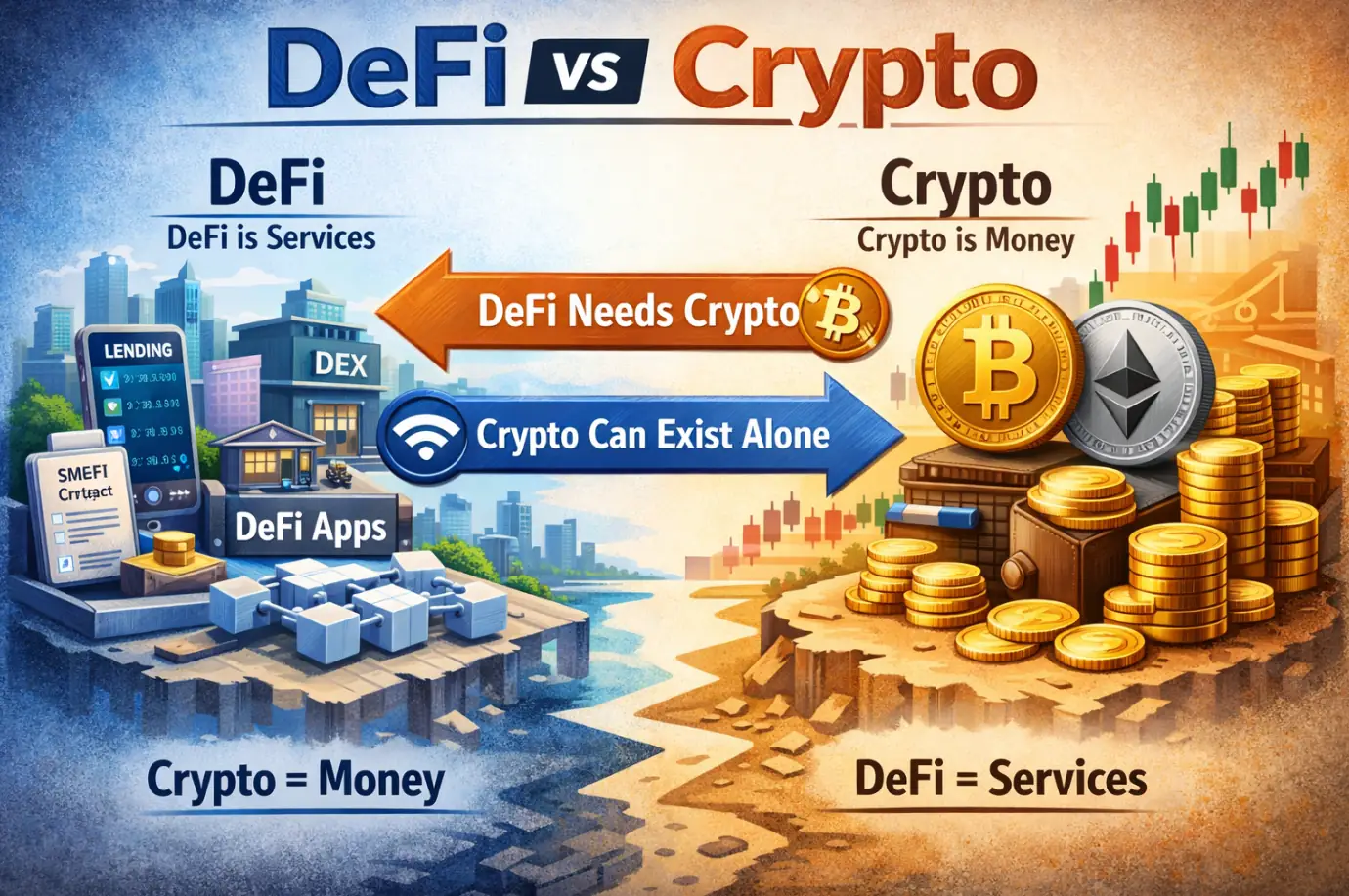
DeFi vs Crypto
One thing most newbies get confused about is the meaning of DeFi in the context of crypto. By the term "crypto," one refers to digital currencies like Bitcoin or Ethereum. On the other hand, "DeFi" refers to applications based on the blockchain network using
Crypto can survive without DeFi. DeFi cannot survive without crypto.
The reason this distinction is important is that when people ask where to buy DeFi coin, for instance, they are essentially purchasing crypto tokens that are used within the DeFi environment.
How to invest in DeFi: A Step by Step Guide
This section explains the practical process. It answers how to invest in DeFi, how to buy DeFi coin, and how to invest in DeFi crypto in simple steps.
Prepare a wallet
A wallet is a necessity for using DeFi services. It contains private keys that are used for the purpose of signing blockchain transactions.
The non-custodial Web3 wallet provides complete control over finances. The private wallet such as the Noone Wallet helps users manage assets and interact with DeFi platforms without transferring control to a third party.
Without a wallet, you cannot begin with learning investments in DeFi.
Purchase crypto coins
DeFi platforms are utilizing crypto assets for transaction and fee purposes. You have to buy ETH, SOL, or stablecoins, for instance, to get started on DeFi platforms.
This can be done via exchange or wallet on-ramp solutions. Once bought, the cryptocurrencies are then sent to your wallet address.
Sounds complicated? Let's look at an example.
Buy cryptocurrency. Send to wallet.
This is part of the process of buying DeFi coin for beginners.
Getting started with protocols
Once your wallet holds cryptocurrency, you can integrate with DeFi. DeFi consists of exchanges, lending platforms, and staking providers.
You go to the website of the protocol.
Click on "connect wallet."
Approve connection.
You are now able to use DeFi functionality right from your wallet.
This is the essence of investing in DeFi crypto.
Common risks
However, before engaging in the world of DeFi, it is important
- Fake sites replicate legitimate protocols.
- Tokens that have identical names may be scams.
- Signing unknown transactions may deplete wallets.
Verify from the official sources for the project involved. Transaction descriptions should be examined for approval. Recovery phrases should always be offline.
Well, what is the key point here?
Verify before trust.
Such habits ensure that users learning how to invest in DeFi do so in a safe way.
DeFi investment strategies
This article is not intended to be financial advice. However, knowledge of common practices will help explain how participants in DeFi are utilizing these protocols.
Borrow and lend crypto
The platforms enable users to lend crypto while earning interest. Users borrow money by locking collateral.
The interest rates change according to supply and demand. Everything in this platform is governed by smart contracts.
Borrow and lend platforms are usually one of the very first stops a person makes when they are researching investment possibilities for DeFi crypto.
Staking & Yield Farming
Certain protocols pay the user for locking their tokens for network functionality and/or liquidity.
Staking is typically supportive of blockchain security. Yield farming is a source of liquidity for exchanges and provides a fee or a reward.
This is one of the common ways of investing in DeFi for passive investing.
Trade DeFi coins using CFDs
There are some users who would want to trade on the prices rather than holding them as tokens. This can be achieved through derivative services that monitor prices of DeFi tokens.
In this approach, there is no need to directly interact with a smart contract. It is based on a conventional trading system.
This is another alternative that individuals consider when inquiring about how to invest in exposure to DeFi coin.
How to invest in DeFi related assets
DeFi is not limited to protocols. Many projects issue governance or utility tokens linked to their platforms.
Users buy these tokens to participate in voting or access services. These assets trade on exchanges like other crypto tokens.
Understanding this helps clarify how to invest in DeFi crypto beyond using protocols directly.
Security management
Security is a major focus in the world of DeFi
- Store recovery messages offline.
- Never share private keys.
- Check Wallet Permissions periodically.
- Cancel approvals of un-used contracts.
A self-custody wallet means that users have to perform all of the above tasks themselves. Although there exist some tools like Noone Wallet that assist users with managing their funds, it is crucial to practice good.
Such an approach is also a part of learning to invest in DeFi appropriately.

Understanding fees
There are costs associated with DeFi transactions that are based on the blockchain network and the level of congestion on the
Transaction charges may be higher.
However, other networks have lower charges.
It is always important for the user to check the estimated fees for the transaction before completing it
What's the key point here?
There are costs of participation.
It is important to understand fees in learning how to acquire DeFi coin.
Staying Informed
DeFi evolves quickly. New protocols appear. Old ones upgrade. Security practices improve.
Users should follow official project announcements and community channels. Avoid acting on random social media links.
This habit supports long term success in how to invest in DeFi crypto environments.
Conclusion
DeFi gives people access to financial services without the involvement of intermediaries. However, DeFi has the responsibility placed squarely on the user's shoulders too. Knowing how to invest on DeFi requires knowing about wallets, protocols, and safety measures too.
The guide described what DeFi is, how it operates, advantages and disadvantages of DeFi, and a step by step guide of how to invest in DeFi coin and DeFi crypto. The guide provided information about risks associated with DeFi as well as basic strategies.
DeFi is not magic. It is code replacing institutions. Once you understand the tools, it is much easier. The key is that in decentralized finance, knowledge is power.


